We built our home
the same way we build
everything else.
A high-performance house on five forested acres, designed by the people who live in it, built by the people who live in it, using materials most production builders have never touched. Three years from permit to final inspection. We just finished building a second house next door, and our focus is turning to silviculture and landscaping — so the exterior hero shot is still to come.
See the full story →Twenty-three pages about what home means.
Before we drew a single plan, we wrote a design brief. Not a spec sheet — a document about how we wanted to feel when we were home. Open plan, single story, modest square footage. A kitchen built for people who sear and sous vide and pull espresso. A covered porch facing the forest, because even in the Pacific Northwest rain, we wanted to be outside.
We'd watched every episode of Grand Designs we could find. We'd read Christopher Alexander. We learned to form concrete from the Essential Craftsman on YouTube. When our corners lined up, we celebrated. We wanted a home that revealed its construction — exposed wood, concrete, and stone; visible systems; craftsmanship that showed process rather than concealing it.
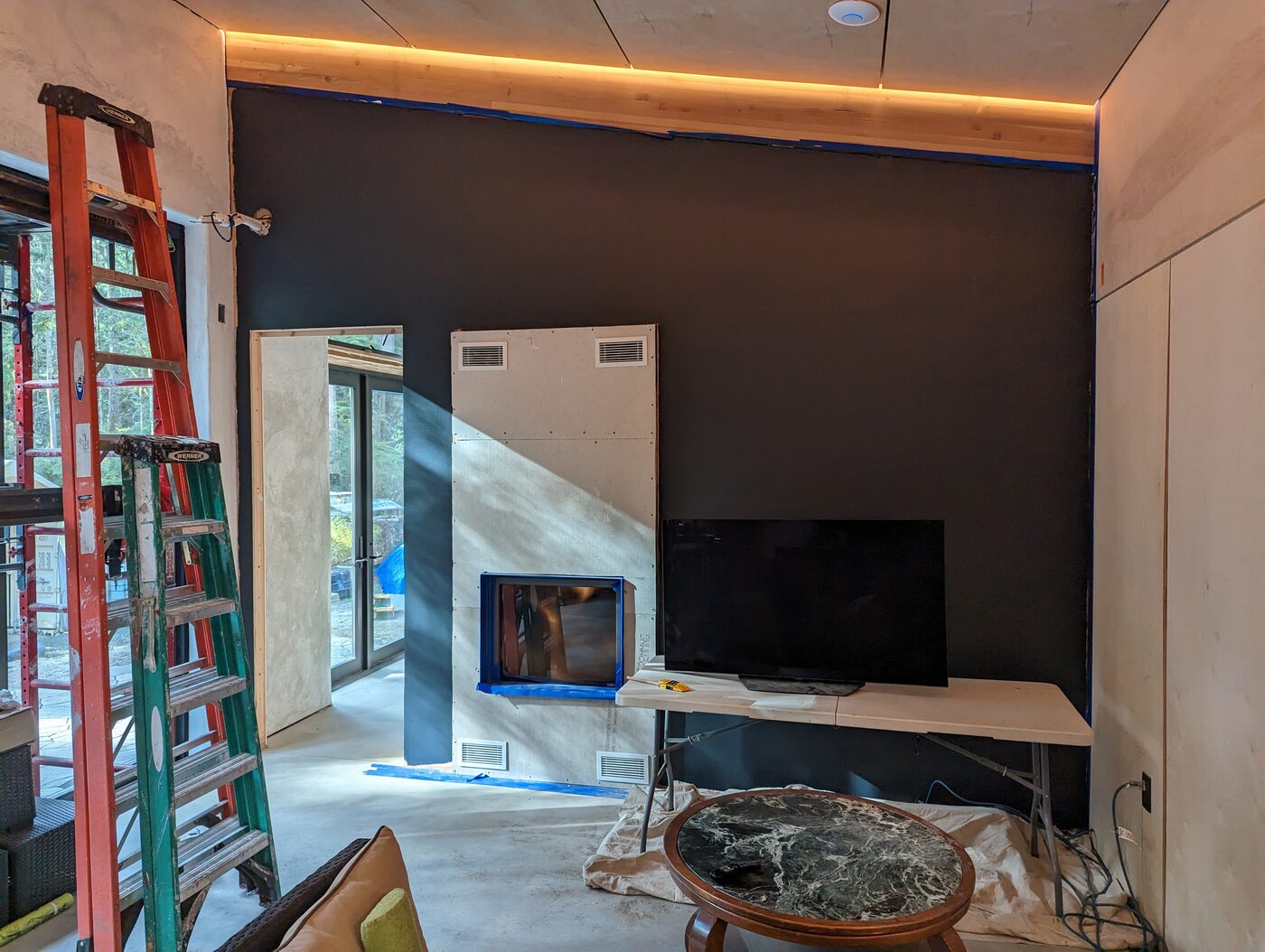
Built from things most builders have never heard of.
Faswall ICF Block
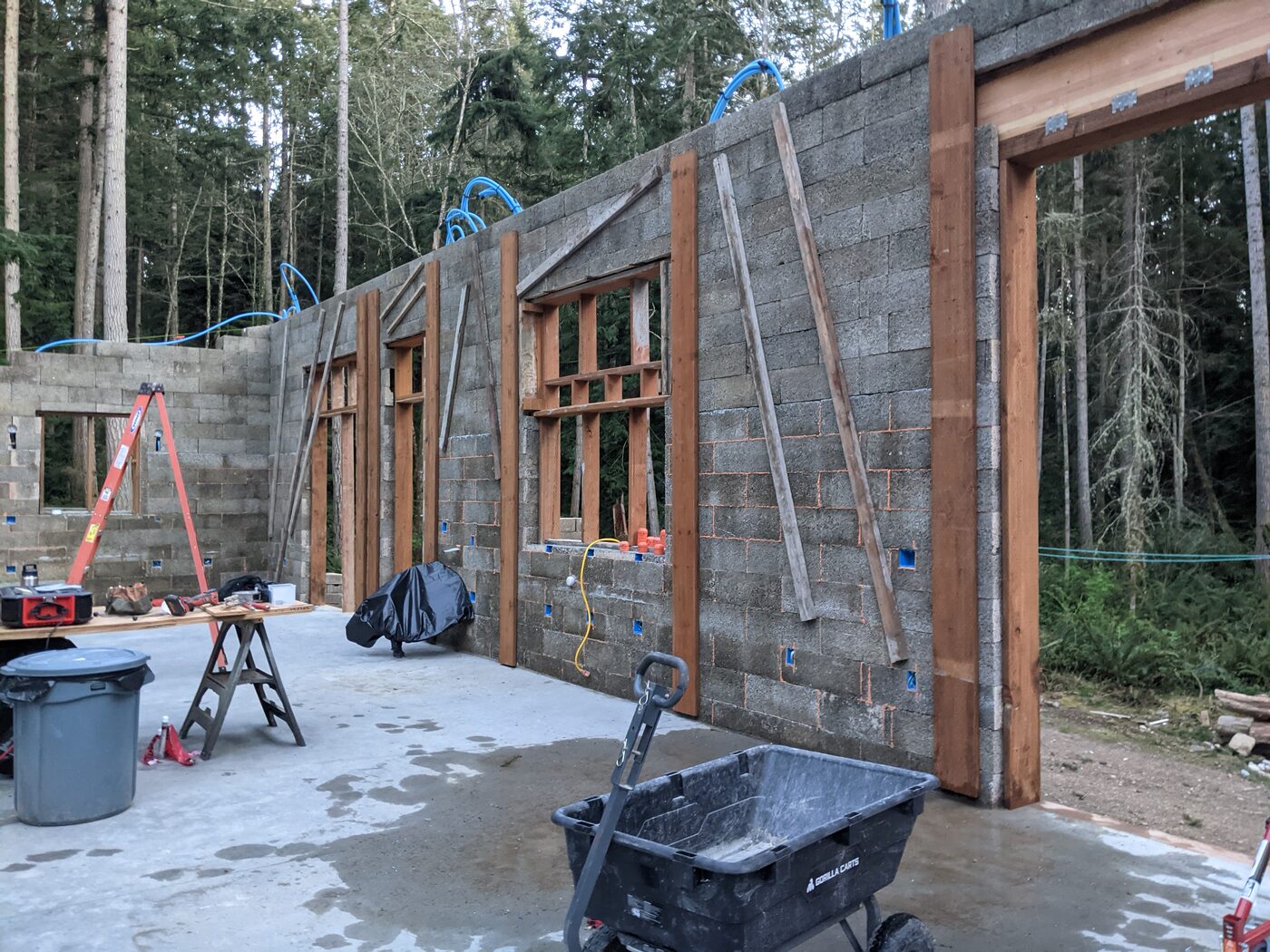
Woodchip-cement insulated concrete forms. Structure, insulation, and disaster resistance in one system. Our family had helped build ICF houses before and we understood the properties — thermal mass, noise abatement, fire resistance. We studied the manufacturer's technical manual cover to cover. When the building inspector hadn't seen the material before, we sent her the entire document.
Lime & Metakaolin Plaster
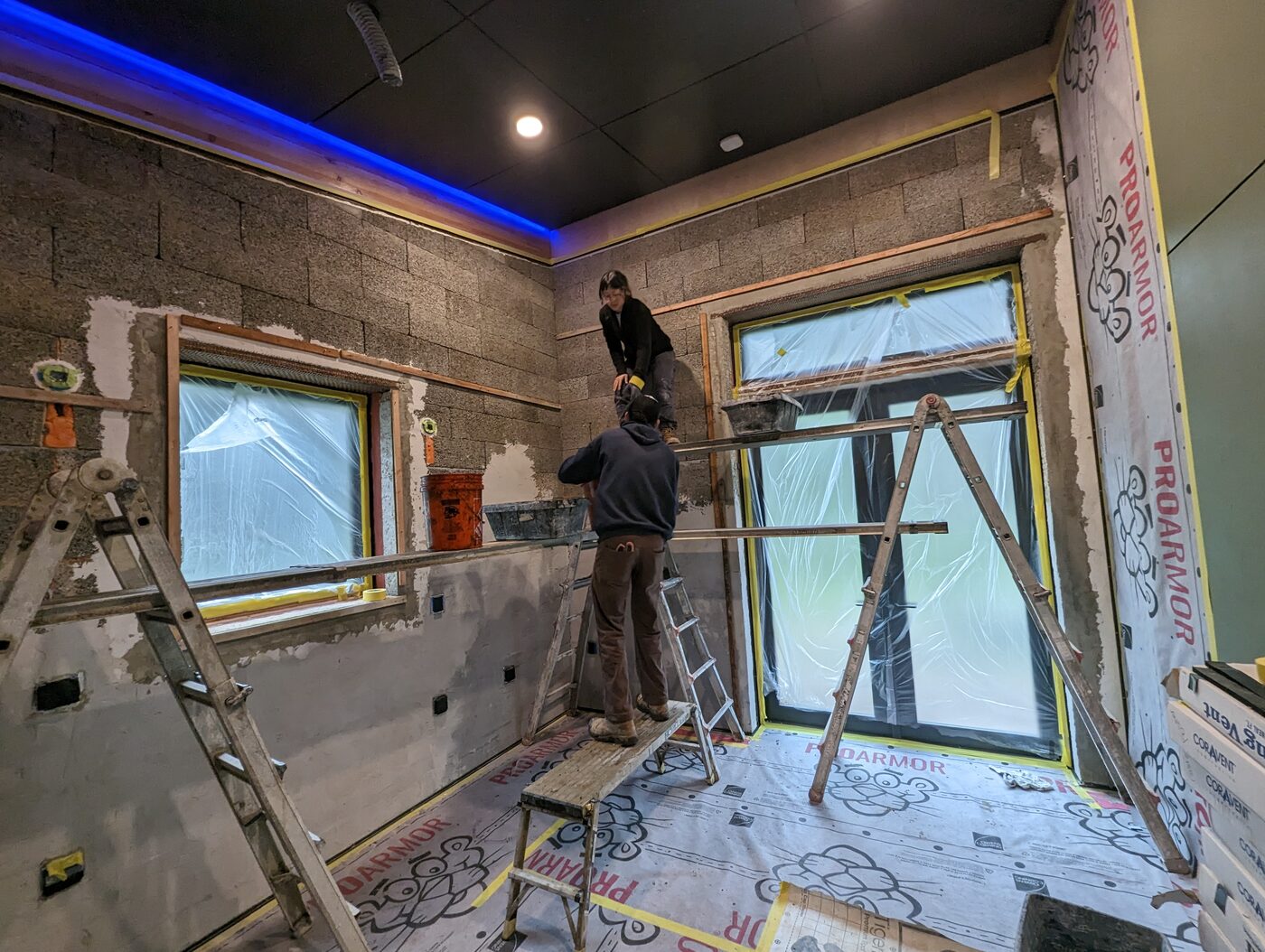
A building material with roots older than concrete, and nearly lost to history. Portland cement displaced lime plaster through the late 1800s — faster, harder, waterproof — and within a generation, the traditional craft was largely forgotten. What survived is scattered among a handful of specialists and researchers, and a quiet revival that began in the 1980s.
We taught ourselves to apply lime plaster on the exterior, working from research alongside a neighbor — a painter and artist who understood surfaces and light. The interior demanded master-level finish work and a compressed timeline. We found James Henderson, President of the Natural Plasterers Guild and one of a handful of practitioners in North America — trained in Australia, Japan, Portugal, England, and Morocco over twenty-four years. He and his partner Jess came to Whidbey Island and we worked alongside them for two weeks. The invoice read: "Thank you for your hospitality. It was definitely a big messy push."
Mixed-Material Exterior
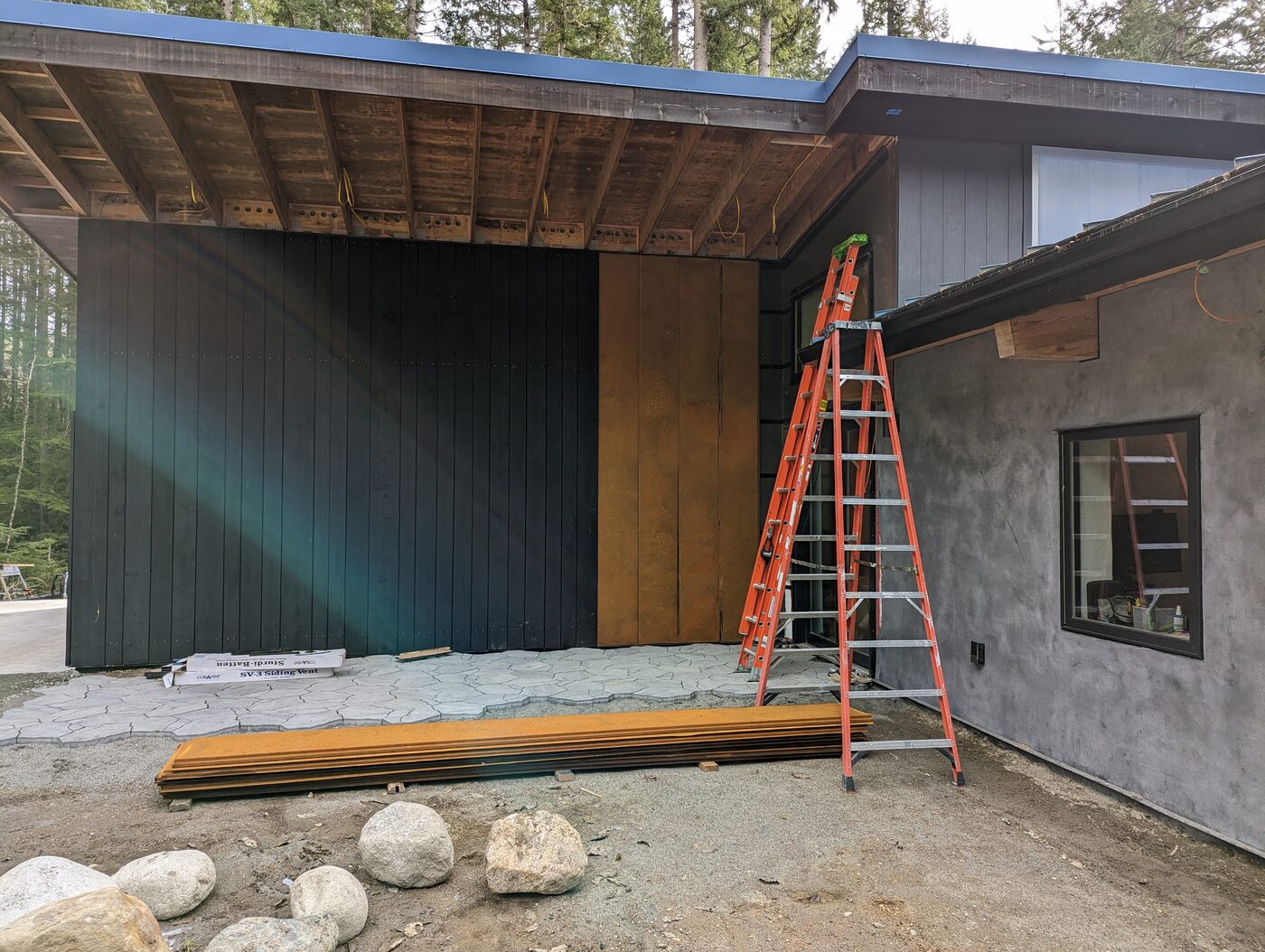
Shou sugi ban. Stucco. Corten steel. Standing seam metal roof. The design brief called for mixed materials — and we meant it. The exterior reads differently from every angle, with textures that weather and age the way natural materials should.
Leathered Concrete Floors
Leathered concrete with hydronic radiant heating, installed by us and commissioned by a radiant floor specialist. We explored radiant cooling as well, but the Pacific Northwest dew point made it impractical.
We did the trades ourselves.
One of us is the electrician. One of us is the plumber and framing foreperson — she also made minion heads out of the rebar safety caps, because building a house doesn't mean you can't have fun doing it. Our son filled in everywhere. We started with a tiny house on a trailer frame — designed in SketchUp, framed ourselves — so we could live on the land while we figured out the real house. And then we spent the next several years building it.
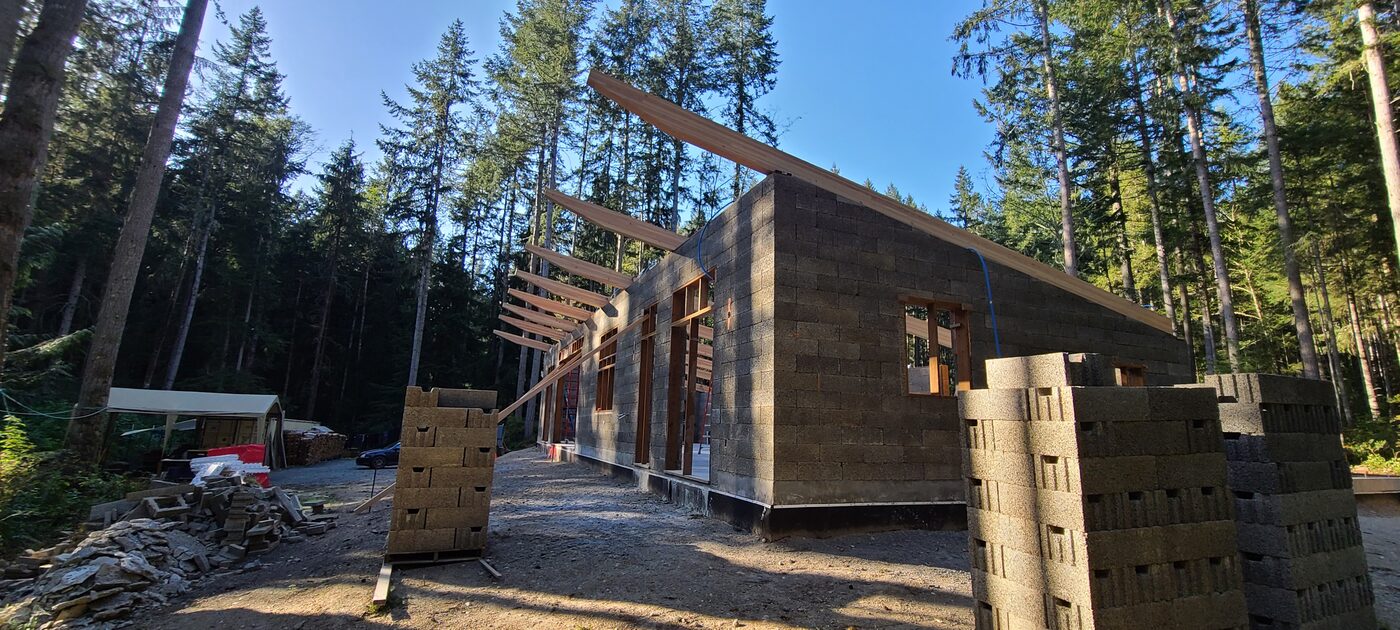
We weren't alone. Friends and neighbors showed up. One welded on the jobsite. One helped us learn to plaster. One designed the kitchen ventilation. A former Disney Imagineer built the house in virtual reality — 809 files — when no one, including the contractors, could figure out how the roof geometry came together. That VR model unlocked the entire project. On beam-raising day, six people in safety vests carried a timber through the forest and set it into place together.
We built through COVID. The bank originally underwrote 48 months, but when interest rates changed, so did the financing picture — for everyone. We were asked to finish ahead of schedule. We moved in under temporary occupancy while still finishing the interior. The building inspector had never seen Faswall before — we sent her the manufacturer's entire technical manual. Three final inspections passed on the same day: March 13, 2023.
What We Did Ourselves
All electrical
Full residential electrical — panel, circuits, fixtures, low voltage. Mentored by a friend who'd owned an electrical company and retired as an electrical inspector — before they rehired him because he was that good. We lost him since. We miss him.
All plumbing
Supply, drain, fixtures. Learned from a plumber who believed in teaching the trade, not gatekeeping it.
HRV installation
Zehnder ComfoAir 200 — whole-house balanced ventilation with heat recovery. Sourced, designed the duct routing, and installed it ourselves. Then did it again next door for the second house.
Exterior lime plaster
Researched a nearly lost tradition and taught ourselves to apply it. The exterior is ours. The interior was a collaboration with a specialist.
Roofing
Standing seam metal roof — installed with a friend who knew what he was doing and was willing to show us.
The house is a system. We treated it like one.
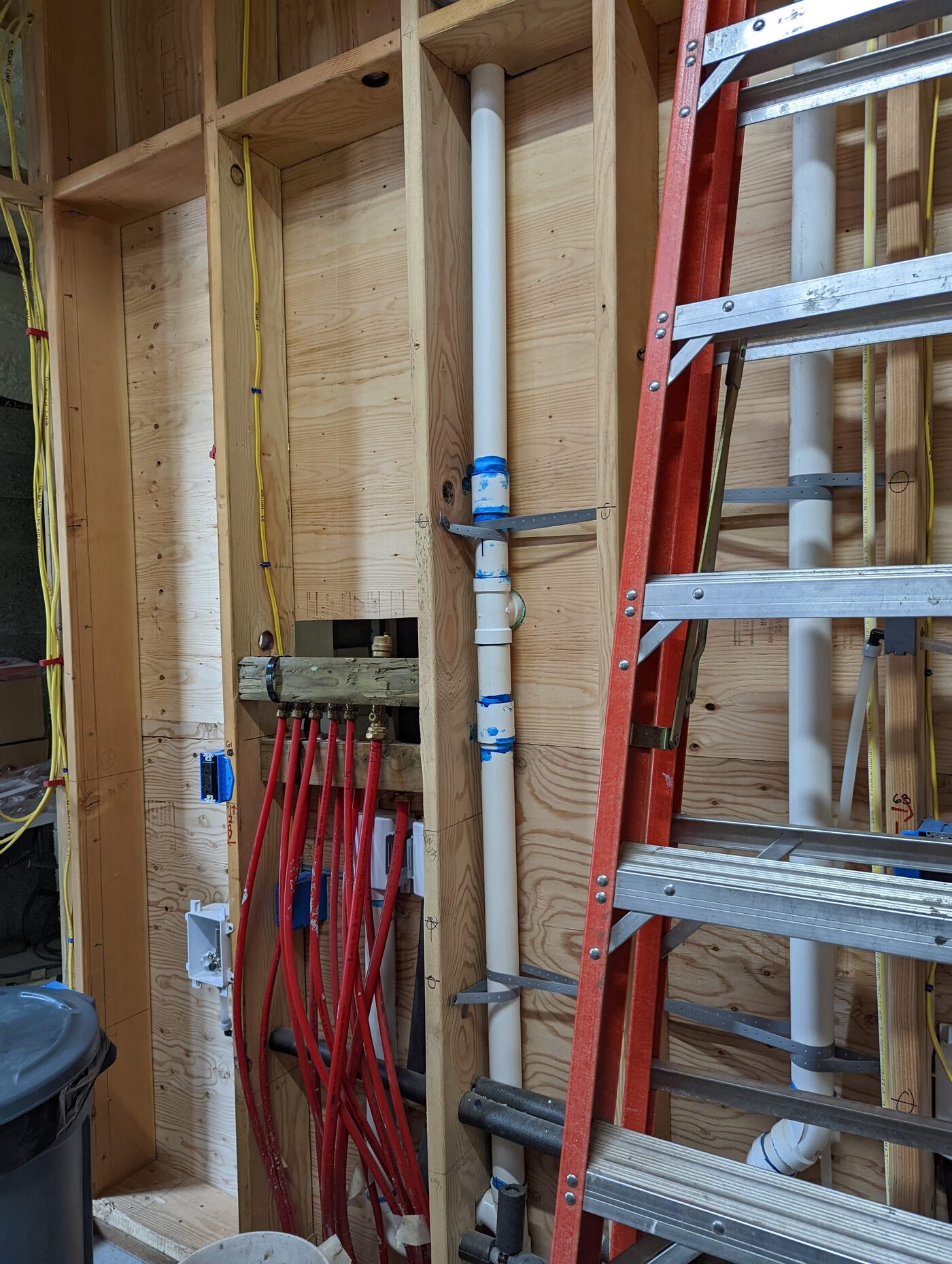
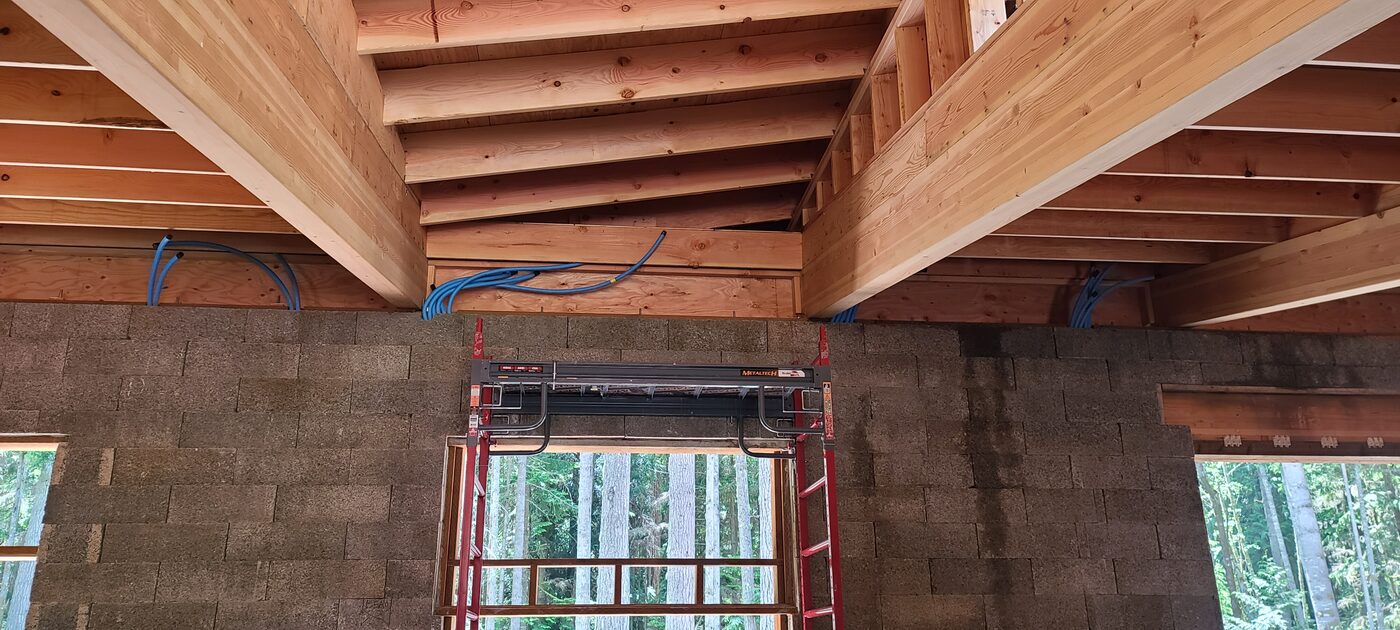
A house this tight needs mechanical ventilation done right. The Zehnder ComfoAir 200 provides balanced fresh air to every room, recovering heat from outgoing air in winter. The kitchen ventilation — commercial-grade make-up air and exhaust — was designed with a friend who spent his career at Boeing and a commercial kitchen startup, and shoots Olympic pistol on the weekends.
Network & Automation
The same approach we bring to our professional work. Full enterprise-grade network with fiber optic backbone, centralized storage, DNS-level ad blocking, and a home automation system that integrates climate, lighting, security, and ventilation into a single platform. The fiber LAN connects back to the original tiny house — which still stands on the property.
Then We Built a Second House
While finishing our own home, we general contracted a second custom build on the adjacent lot — for family who'd moved across the country to be here. Different construction system (SIPs and ICF), same ethos. Heated and cooled radiant floors, solar with battery storage, and a standing seam roof. We installed the HRV in both houses. We did all the low voltage in both. Same building department, same suppliers, same decade. Same forest.
Build it the way you'd want it built.
We didn't hire an architect. We wrote a 23-page design brief, found a structural draftsman, and drew our own electrical and plumbing plans. We chose materials that most builders had never seen — and then explained them to the building inspector ourselves. We did it this way because we wanted to understand every part of what we were building.
That's the same approach we bring to every project at Plateau Lane Studios. Understand the system. Choose the right materials. Do the work yourself when you can, and bring in specialists when the work demands it. Document everything. Build it to last.
Craft is transferable
The discipline of building a home — managing contractors, reading code (building code), debugging systems under pressure, working within constraints that don't bend — is the same discipline we bring to software, electronics, and fabrication. The tools change. The mindset doesn't.
Community built this
A neighbor helped us learn to plaster. A friend designed the kitchen exhaust. An Imagineer built the house in VR. Someone welded on the jobsite. Someone mentored on electrical. Someone mentored on plumbing. The house is ours, but it was built by a community — and that community became this partnership. We've been trying to build something together for the better part of two decades. The houses are where the relationships formed.
Working on something
interesting?
We take on a small number of projects at a time and choose them carefully. If you think there's a fit, tell us what you're working on.
Get in Touch →